Happy Hellos and Hard Goodbyes On Project Team

We’ve just said some sad good-byes to most of our team members on the Project on Family Homelessness, but we welcome several great additions to our team. Here’s who will be impressing you in the months to come, and a reflection on some of the outstanding work of our former team members.

New Project Assistants:  Krista Kent and Emma Lytle

Krista Kent is a senior in the Digital Design program, minoring in Spanish. She’ll be our new design assistant, taking over for McKenna Haley (see below).
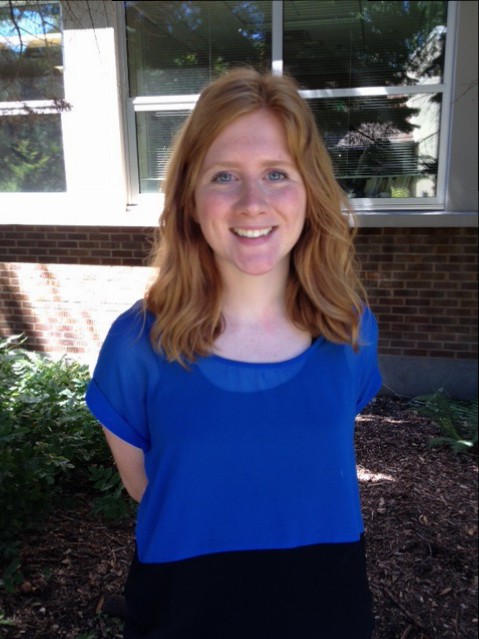
Krista Kent photo digital design assistant Project on Family Homelessness
Krista Kent joins our team as digital designer.

Krista comes to us with a strong background in design and active involvement in the community. Since winter of 2012, Krista has worked with Seattle University’s Center for Service and Community Engagement. She created flyers and informational design for the Center, and has worked at Bailey-Gatzert Elementary assisting teachers in classrooms and helping first graders in an afterschool-tutoring program.  Recently Krista had the opportunity to re-brand First Cup Coffee House into Mama’s Café, as part of the 23rd and Union Small Business Consultation and Community Enhancement Project.

Emma Lytle is our new project assistant, replacing Tiana Quitugua, who just graduated (see below).

Emma Lytle photo project assistant Project on Family Homelessness
Emma (left) at the American Refugees photo booth hosted by Firesteel; she’s posing with Jediah McCourt.

Emma is entering her senior year as a strategic communications major at Seattle University. She joins us with a passion for working with non-profits and with children. She recently finished a seven-month internship with the Make-A-Wish Foundation, where she handled sensitive communication with families and healthcare professionals. Emma also worked for several years as a daycare teacher and loves working with children and families. Some of our partners might remember Emma from her enthusiastic volunteer work and professionalism at the Hack to End Homelessness and the SIFF American Refugees premiere. She’s busy working on outreach for the StoryCorps project.

New Grad Assistant/Project Coordinator: Perry Firth 

We’re happy to welcome back Perry Firth, in an expanded role as half-time Project Coordinator, taking over for Graham Pruss (see below).

Perry Firth photo Project coordinator Project on Family Homelessness
Perry Firth returns in an expanded role.

Perry is continuing her graduate work at Seattle U in school psychology and spent the past school year as a research assistant to a visiting scholar and counseling psychologist. Their work together focused on prevention and wellness,  ecological counseling, and toward the end of their time together, school shootings.   That position ended just as we needed to fill our position — lucky us!  Perry is committed to approaching mental health issues through a social justice lens, and has a special interest in anxiety disorders, adolescence, and issues that disproportionately impact women.  She is a gifted writer who is especially adept at analyzing the intersection between academic research and its applications to family homelessness, just as she did in these Firesteel posts on Adverse Childhood Experiences (ACEs) and the all-time most-viewed Firesteel post, on dehumanization, “Why We Keep Walking.” We’ll be looking for her to help us understand more about the important links between housing and academic achievement for children in our state.


Continue reading

Guest Post: One Night in a Car, Our Family’s Story

Watching her child and grandchildren struggle with homelessness drove Diane to action. Read about their experiences and how Diane created a fantastic advocacy event scheduled for Aug. 22-23 in Pierce County.

Lisa Gustaveson's avatarSeattle University School of Theology and Ministry's Faith & Family Homelessness Project

Diane is a devoted wife, mother of two daughters and grandmother of three. She and her husband are entrepreneurs and have owned their own business for over 30 years. Diane has participated in 60-mile cancer walks, Kiwanis, Lions, and has volunteered with St Jude’s and the Make-A-Wish Foundation. She is a passionate advocate for better programs to prevent and eliminate family homelessness.

This is her family’s story.

One Night in a Car

Over the past year I’ve dreamt of being involved in an event where others can learn what it is like, just for one night, to sleep in your car. If nothing else, the event would increase community awareness around the many children who call the family car home. These kids wake up in their car and head off to school to return to a car that may or may not be in the same place. My family has…

View original post 1,033 more words

“Just A Chapter In My Life”: Tacoma Mom Previews StoryCorps for News-Tribune

Tacoma mom Jordan Kemper says that being homeless with her kids “was a chapter in my life; it doesn’t define me.” She talked to News Tribune columnist Larry LaRue about why she’ll be sharing her experiences with StoryCorps later this month. Read the column below.

To find out how you can share your story in King, Pierce or Snohomish counties this summer, contact findingourway@storycorps.org or call us at 206/398-4457.

Read more about the project here

News Tribune Logo

Larry LaRue: The homeless have their stories — and now they can tell them

Staff writer, Tacoma News Tribune

July 1, 2014


Hack to End Homelessness: Tiana’s Take (New Video)

What was the role of Seattle University faculty, students and staff in the Hack to End Homelessness? They were planners, community liaisons, hackers and volunteers.  This awesome new video by our project assistant, Tiana Quitugua, tells the stories of the many folks in red at the Hackathon.

Tiana is one of the stellar Seattle U students graduating this weekend, and this is one of her final projects for us.  Thank you, Tiana, for capturing this experience and telling it from the SU perspective, and for all your great work for us.

For more about the Hackathon, read our recap.

StoryCorps and Gates Foundation Launch “Finding Our Way” Project

NOTE: This blog post is about our StoryCorps project launch. For more recent information, see our StoryCorps page.

StoryCorps Tierra Jackson John Horan
One of the most memorable StoryCorps segments for the family homelessness community is the story of Tierra Jackson, who with her former principal John Horan reflected on what it was like to be homeless in high school. Photo credit: StoryCorps.

Every Friday morning at around 7:30 a.m., millions of people around the country are entranced by a weekly public radio segment in which everyday Americans tell the stories of their lives.  It’s the beloved StoryCorps, and it’s coming to our region in summer 2014 to find stories about families who have experienced homelessness.

While only about 50 of its stories per year make it onto National Public Radio, StoryCorps has actually recorded more than 50,000 stories in its 10 years. The stories are archived in the Library of Congress.

This July and August, people in Western Washington who have experienced family homelessness will be able to tell their own stories as part of the new StoryCorps project, “Finding Our Way: Puget Sound Stories about Family Homelessness.” The project is funded by a grant from the Bill & Melinda Gates Foundation, who asked our Project on Family Homelessness to serve as the local coordinator.

We’ll be working with local host partners to find stories from among their current and recent clients, and also reaching out to the public to find people who have experienced family homelessness in their past. The stories will also be available for our advocacy efforts to end family homelessness in Washington state.

Find out how service providers can help us find the stories and use them to advocate. Got a story? Click to jump to the details.

Continue reading

2014 Conference on Ending Homelessness, Yakima, WA

Written by Graham Pruss, Project Coordinator, Seattle University’s Project on Family Homelessness

red lion hotel restaurant and lounge billboard welcome ending homelessness
The Red Lion Welcomes Ending Homelessness

On May 21 and 22, 2014, Yakima hosted the Washington Low Income Housing Alliance’s 24th Annual Conference on Ending Homelessness, a dynamic combination of speakers and workgroups attended by more than 600 service providers, non-profit organizers and advocates for low-income people. I attended the Conference with colleagues from Seattle University’s Project on Family Homelessness, and because of my own research around income inequality, direct outreach, vehicle residency, advocacy and service provision. This was my second year at the CoEH and my first not presenting, allowing the time and lack of pressure to appreciate the Conference fully. I was looking forward to participating in workshops such as “Does Class Matter In Homeless Advocacy?,” “Reduction In Federal Affordable Housing Funding & The Re-Emergence Of Contemporary Homelessness,” and “Finding The Forgotten: Engaging The Chronically Homeless.”

Alan Peterson, managing director of Real Change on Class in Homeless Advocac
Alan Preston, managing director of Real Change, on “Class in Homeless Advocacy”

I arrived at the Conference excited to see friends, colleagues and acquaintances from throughout Washington state. After lunch, we broke into workshops prepared by the Conference – all were very well organized, with clear goals and information to take home and follow up on. In particular, Western Regional Advocacy Project (WRAP) Executive Director Paul Boden’s presentation on the “Reduction in Federal Affordable Housing Funding” was an eye-opening experience for the packed room. Boden spent an hour and a half frenetically describing the effect of reallocating housing funding from established U.S. community cornerstones such as the departments of Veterans Administration (VA) and Housing and Urban Development (HUD), to general “homeless” services such as the current McKinney-Vento federally funded programs. On this, Boden remarked, “The impact of de-funding housing was that ‘poor’ people became ‘homeless’ people. But, they’re still people. Housing, health care and education are not homeless issues, they are social justice issues.”

Continue reading

Seattle International Film Festival “American Refugees” Premiere (Haley’s Recap)

Seattle University, four animated shorts, and a determination to change the way people see family homelessness

Written by Haley Jo Lewis, Student Project Assistant for the Seattle University Project on Family Homelessness

Seattle University: empowering leaders for a just and humane world. But what does that really look like?

It was a sold-out show on May 19 at the Harvard Exit theatre. While a sold-out show is not necessarily unusual, the content of the films made it remarkable. The films, titled collectively as American Refugees, are four animated shorts that tell the stories of families, homelessness and their resilience against all odds.

siff harvard exit theatre
Marquee at the Harvard Exit theatre. Photo by Steve Schimmelman.

Seattle University’s Film and Family Homelessness Project had recruited five professional filmmakers to create these films. Seattle University students were involved throughout the process — assisting the filmmakers as Student Fellows, helping to develop discussion guides, designing collateral and finally, volunteering at the event itself.

Continue reading

New Films on Family Homelessness Premiered, Available for Download

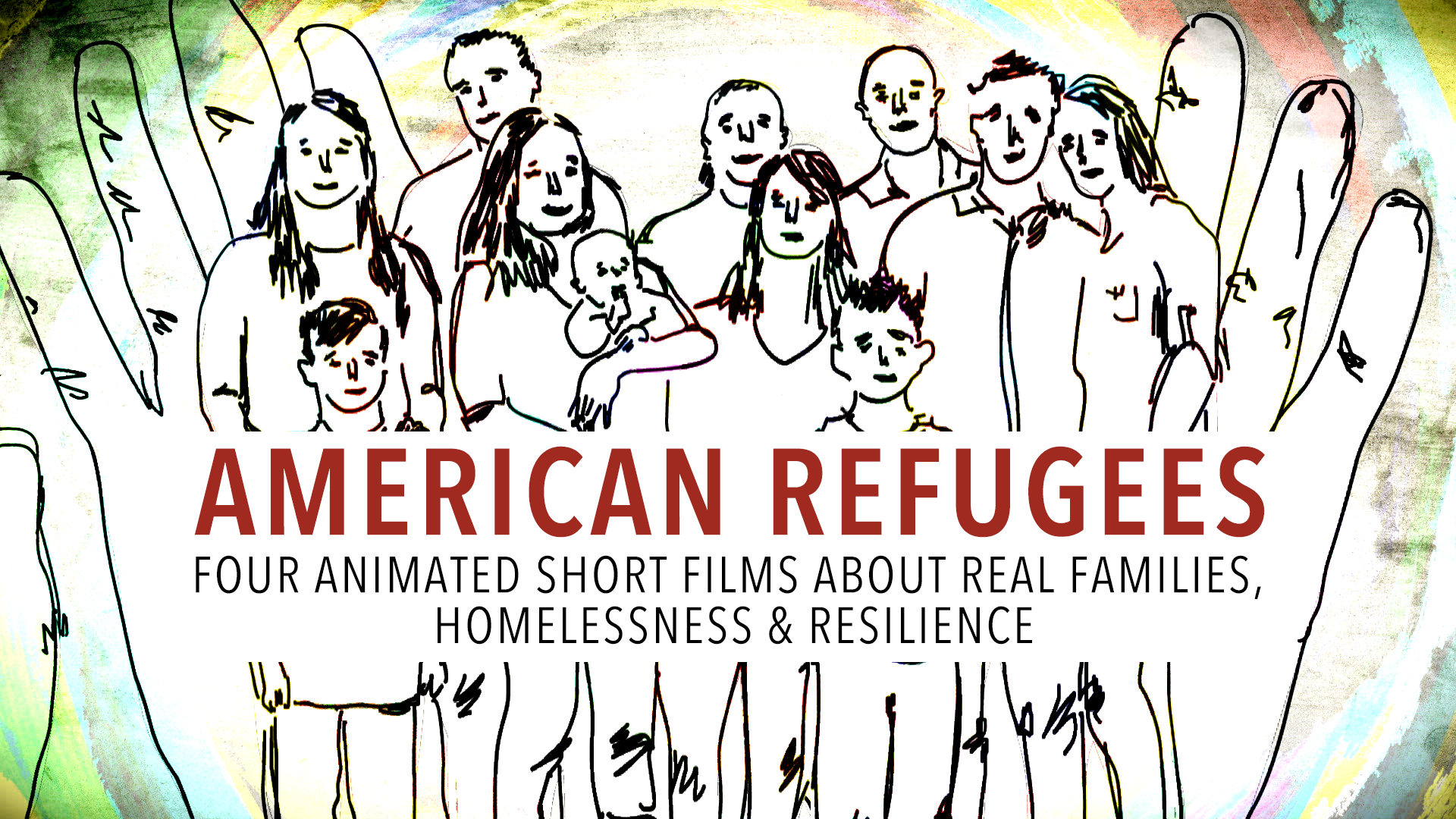
Our sister program, the Film & Family Homelessness Project, has created four new animated short films about real families, homelessness and resilience.

american refugees

“American Refugees” premiered to great acclaim last night, and now you can watch these remarkable films online at http://www.americanrefugees.org.

Visit our Facebook page to see photos from the Firesteel green screen booth and photos from the screening and after-party.

Then, watch the films and share them with your friends, family, colleagues, church, school group — anyone who needs to hear about how important it is to end homelessness among families. Download a discussion guide too!


Firesteel Blog: Hacking to End Homelessness

More from inside the Hackathon!  Our partners at Firesteel have documented their Hack to End Homelessness experience in this great blog post. It describes Erin’s experiences working on the “Maptastics” super-team, features one of Denise Miller’s trademark awesome videos about the weekend and also includes an interview with our special guest, Mark Horvath.

Read it here: Firesteel / Blog / Hacking to End Homelessness.


Mark Horvath Hacking to End Homelessness: May 1-4, 2014 (Haley’s View)

Written by Haley Jo Lewis, Student Project Assistant, Seattle University’s Project on Family Homelessness

After months of working with Seattle University’s Project on Family Homeless, I knew just how influential Mark Horvath is in efforts being made to end homelessness. His passion and energy are contagious, even through the computer screen. I was eager to meet the man behind the film @home and the Invisible People movement.

On May 1, partners from the three Seattle University projects on family homelessness welcomed e-activist Mark Horvath (@hardlynormal) to Seattle. We had invited Mark to join our partners at Impact Hub and Hack to End Homelessness (@hack2end) to motivate and educate Hackathon participants on homelessness and its solutions. After watching the documentary about his work, @home, multiple times and following his passionate work on Twitter and Youtube, I was anxious and excited to meet Mark.

Mark’s work could be said to manifest in the documentary @home. This new film followed Mark on a cross-country journey as he talked with homeless people and filmed their stories to share with the world. Read my reaction on Firesteel to this moving, inspiring, and beautiful documentary.

Not only had I written a blog post in reaction to @home, but I had also created some art inspired by his film. I was excited to meet the man behind the camera, and to give him the art I had created for it.

mark horvath haley lewis twitter drawing @home film
I (@peopleneedhomes) tweet a photo to Mark of one of the drawings I did for him a few days before our meeting.


Mark was kind, compassionate, and grateful. I knew from the get-go that Mark was a storyteller, but in person it was a whole different ball game. Every story he told was captivating, and when he spoke, people listened. There is something about the way Mark tells stories that is especially moving. Once homeless himself, Mark is dedicated to his work in ways that other people aren’t. Mark’s vulnerability and closeness to the issue is what makes his stories so powerful and moving.

Continue reading