Moving Hearts, Changing Minds About Homeless Students: NAEHCY’s Annual Conference

By Perry Firth, project coordinator, Seattle University’s Project on Family Homelessness and school psychology graduate student

Paving the way image 1 

Caption: This poster from the conference just about sums it up: all children, including those who are homeless, deserve equal access to educational opportunity. Image from NAEHCY.org

As a first-time attendee at the National Association for the Education of Homeless Children and Youth (NAECHY) annual conference in Kansas City, October 25-28, I wasn’t quite sure what to expect.

But the opportunity to learn about where the field of “homeless education” is going, and what that might mean for the work we do on the Project on Family Homelessness, was just too exciting and important to miss.

It turns out my premonition was correct. The conference sparked ideas that I was able to apply very soon after my return, in a discussion about a local school district that is struggling to support its children who are homeless. Continue reading

New Infographics on Childhood Homelessness, Education, and Child Development

Like Infographics? Interested in visual representations of some of the issues that can accompany childhood homelessness and poverty? Then take a peek at the infographics we recently created for our seven-part series, “Homelessness and Poverty in the Public Education System.”

Learn more by reading the series on Firesteel’s website here

We are always interested in how homelessness, poverty and stress affect child development and adult outcomes. Recent research into these relationships for our seven-part series “Homelessness and Poverty in the Public Education System” yielded not only great insights, but, thanks to the talents of our digital designer Krista Kent, nine new infographics. Continue reading

Homelessness and Poverty in the Public Education System: An Intro to Our Blog Series

This is a re-post from our partner, Firesteel, from Sept. 2, 2014.  This week, Firesteel began publishing an insightful seven-part series on homelessness in the classroom, written by our project coordinator, Perry Firth. Homelessness affects more than 30,000 school-age children in Washington state.
The series also includes brand-new infographics, designed by our digital design assistant, Krista Kent (see below). Read and share!

Children know when they are falling behind academically. As they continue to struggle, they can develop both low self esteem and a dislike of school. That is why it is so essential that children who need extra help get it.<br /><br /><br /><br /><br /><br /><br /><br /><br /><br /><br /><br />
Image from pixabay.com.


Children know when they are falling behind academically. As they continue to struggle, they can develop both low self esteem and a dislike of school. That is why it is so essential that children who need extra help get it. Image from pixabay.com.

As the new school year starts, teachers face many challenges. So do children who are dealing with homelessness and poverty. And this couldn’t be truer than for impoverished children who are also in need of special education services. With parents focusing on day-to-day survival and too busy to consistently advocate for their needs, children who are homeless may fail to receive the services they need to succeed in school.

The result is that children already harmed by their living circumstances can fall even further behind. Therefore, adults who work with children in poverty and homelessness need to understand how this environment influences academic skill and emotional development, and how it relates to special education needs.

So, we present this seven-part series on how homelessness and poverty affect the development of children, and how this can show up in the education system. Thanks to Perry Firth for contributing this important series.

Read the full post here and follow the seven-part series on Firesteel.

Also, check out these new infographics created for the series by our digital design assistant, Krista Kent. 


Continue reading

As Heard on NPR: Homelessness Threatens Student Success

This is a re-post of an article published on Firesteel’s blog Aug. 22, 2014.

In a StoryCorps conversation that aired on NPR this morning, a student talks with her mom about attending high school while living in a car. Image from StoryCorps.

Written by Denise Miller, Firesteel Advocacy Coordinator

More than 30,000 schoolchildren in Washington state are experiencing homelessness.

In a heart-wrenching story that aired on NPR this morning, one of these students talks about the challenges of attending high school while living in a car with her family. [Note – in April 2025, a family member requested the story be removed because circumstances have changed, and we are honoring that request.]

The story was collected as part of the Gates Foundation’s “Finding Our Way” initiative, which has given more than 150 people in King, Pierce and Snohomish counties a chance to share in their own words how homelessness has affected their lives.

Read This Post in Full.

See More about our StoryCorps Project.

Project Cool: Supplying a Brighter Future for Children who are Homeless

Written by Krista Kent, Digital Design Assistant, Seattle University Project on Family Homelessness and senior at Seattle U

crayola-markers-

As a child I always loved buying new school supplies, and there was perhaps nothing better than a brand-new case of Crayola markers. Having worked in a first-grade classroom this past year, I have seen that students are still excited to have new supplies. But for families who can’t afford to buy supplies, local supply drives play an important role in the community.

Recently I had the opportunity to participate in Project Cool for Back to School, which gathers supplies and creates backpacks for local school-aged children who are homeless. Volunteers came together at Columbia City Church of Hope earlier this month to help assemble and pack backpacks full of school supplies and dental kits.

Presented by the Seattle/King County Coalition on Homelessness, Project Cool prepared more than 1,300 backpacks with the help of 130 volunteers over the course of five days. The backpacks will be distributed to nonprofit organizations in August, just in time to get them to students all over King County.

Behind the scenes of a major effort

When I first arrived, I signed in, created a nametag, and then was led downstairs to where all the supplies were set up. There were big signs clearly marking where each station was located, including a first-aid station and a table set with coffee and donuts; it was clear that Project Cool really appreciates their volunteers.

During introductions I learned that there were volunteers from differing backgrounds: staff from the Salvation Army, YWCA, YMCA, even students who are currently in the youth program at the YMCA. Regardless of whether this was our first or fifth year with Project Cool, we all arrived with the same intention of making sure that every student comes to class with school supplies.

After introductions, the 11 of us split into groups and set off to different stations. Some prepared dental kits, some took out the recycling, and others cut ribbon that would be used to mark backpacks ready for distribution. For the two hours that I was there, I removed the plastic encasing from the backpacks and took out the small silicone sanitary packs that were inside.


Continue reading

New Films on Family Homelessness Premiered, Available for Download

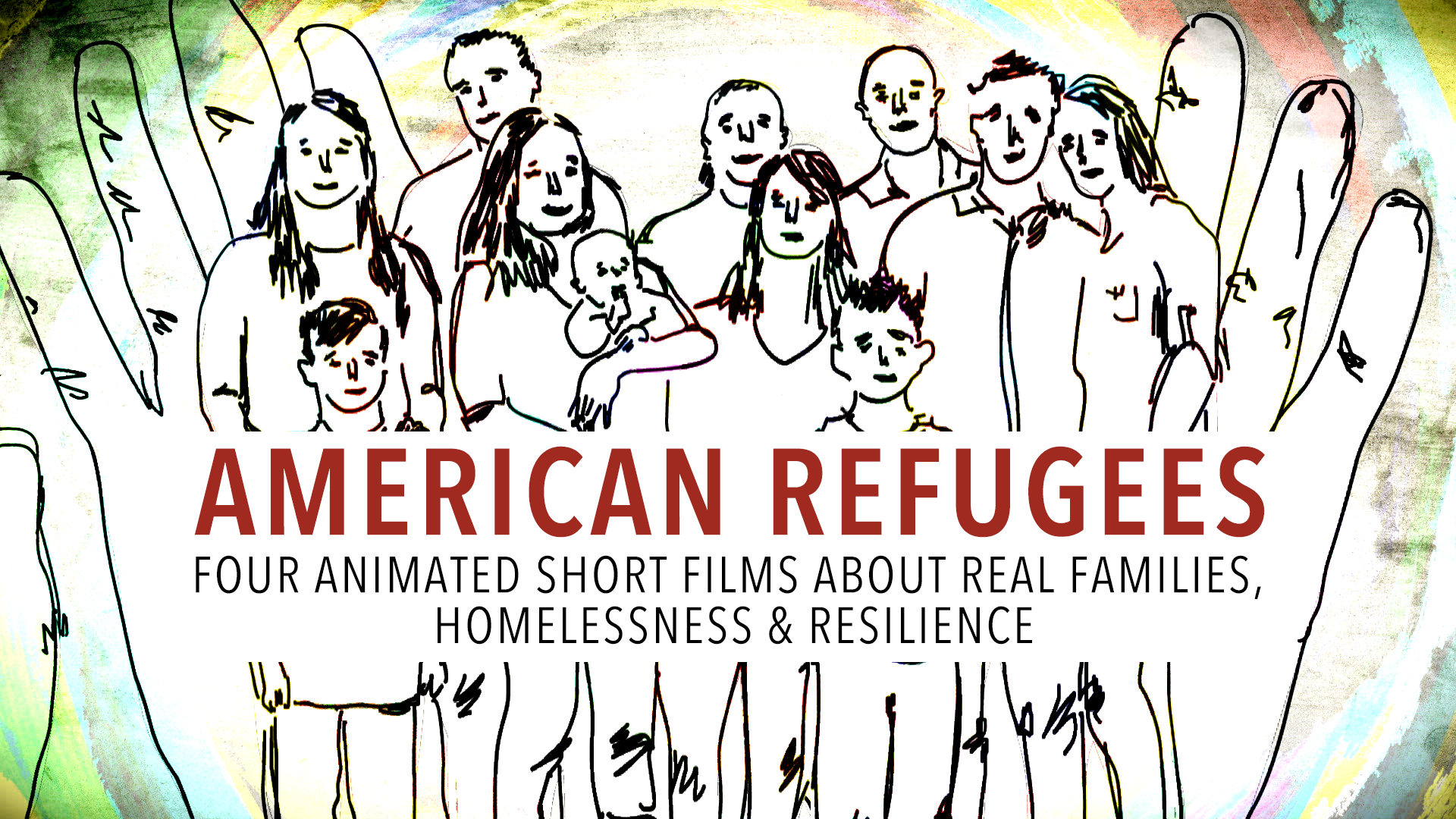
Our sister program, the Film & Family Homelessness Project, has created four new animated short films about real families, homelessness and resilience.

american refugees

“American Refugees” premiered to great acclaim last night, and now you can watch these remarkable films online at http://www.americanrefugees.org.

Visit our Facebook page to see photos from the Firesteel green screen booth and photos from the screening and after-party.

Then, watch the films and share them with your friends, family, colleagues, church, school group — anyone who needs to hear about how important it is to end homelessness among families. Download a discussion guide too!