Homelessness and Poverty in the Public Education System: An Intro to Our Blog Series

This is a re-post from our partner, Firesteel, from Sept. 2, 2014.  This week, Firesteel began publishing an insightful seven-part series on homelessness in the classroom, written by our project coordinator, Perry Firth. Homelessness affects more than 30,000 school-age children in Washington state.
The series also includes brand-new infographics, designed by our digital design assistant, Krista Kent (see below). Read and share!

Children know when they are falling behind academically. As they continue to struggle, they can develop both low self esteem and a dislike of school. That is why it is so essential that children who need extra help get it.<br /><br /><br /><br /><br /><br /><br /><br /><br /><br /><br /><br />
Image from pixabay.com.


Children know when they are falling behind academically. As they continue to struggle, they can develop both low self esteem and a dislike of school. That is why it is so essential that children who need extra help get it. Image from pixabay.com.

As the new school year starts, teachers face many challenges. So do children who are dealing with homelessness and poverty. And this couldn’t be truer than for impoverished children who are also in need of special education services. With parents focusing on day-to-day survival and too busy to consistently advocate for their needs, children who are homeless may fail to receive the services they need to succeed in school.

The result is that children already harmed by their living circumstances can fall even further behind. Therefore, adults who work with children in poverty and homelessness need to understand how this environment influences academic skill and emotional development, and how it relates to special education needs.

So, we present this seven-part series on how homelessness and poverty affect the development of children, and how this can show up in the education system. Thanks to Perry Firth for contributing this important series.

Read the full post here and follow the seven-part series on Firesteel.

Also, check out these new infographics created for the series by our digital design assistant, Krista Kent. 


Continue reading

As Heard on NPR: Homelessness Threatens Student Success

This is a re-post of an article published on Firesteel’s blog Aug. 22, 2014.

In a StoryCorps conversation that aired on NPR this morning, a student talks with her mom about attending high school while living in a car. Image from StoryCorps.

Written by Denise Miller, Firesteel Advocacy Coordinator

More than 30,000 schoolchildren in Washington state are experiencing homelessness.

In a heart-wrenching story that aired on NPR this morning, one of these students talks about the challenges of attending high school while living in a car with her family. [Note – in April 2025, a family member requested the story be removed because circumstances have changed, and we are honoring that request.]

The story was collected as part of the Gates Foundation’s “Finding Our Way” initiative, which has given more than 150 people in King, Pierce and Snohomish counties a chance to share in their own words how homelessness has affected their lives.

Read This Post in Full.

See More about our StoryCorps Project.

StoryCorps Finding Our Way — Recordings Bring Laughter, Tears and Inspiration in Snohomish County

UPDATE, Aug. 21, 2014, 9:20 a.m.: We’ve just learned that the first story from this series will be aired on NPR’s “Morning Edition” on Friday morning, Aug. 22. More details here


Week Two of our StoryCorps recordings brought nearly 50 storytellers to the YWCA Family Village Lynnwood.

In this post by our partner Firesteel, Denise Miller recounts the wonderful week of storytelling, including a truly memorable moment for one participant. Check it out!

StoryCorps Lynnwood sign

For more about StoryCorps in Snohomish County, read this excellent article by Julie Mulhlstein of The Herald in Everett. 

A Local Perspective on the 2014 National Conference on Homelessness

Inside the Conference that’s Inside the Beltway: Mark Putnam from the Committee to End Homelessness in King County reflects on the recent annual National Conference on Ending Homelessness in Washington, D.C. Family homelessness was well represented at this conference, and our “American Refugees” short films played a role, inspiring the 1,600 conference goers as they waited for the First Lady to speak.

Lisa Gustaveson's avatarSeattle University School of Theology and Ministry's Faith & Family Homelessness Project

Submitted by Mark Putnam, Director, Committee to End Homelessness in King County

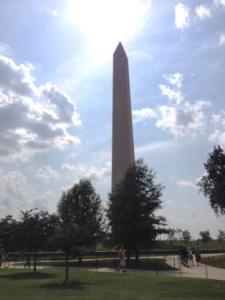
MOnumentThis past July, several King County based Committee to End Homelessness staff braved the heat and humidity of a Washington, D.C. summer to attend the 2014 National Conference on Ending Homelessness.

The annual conference offers thousands of people from across the United States and Canada who work to end homelessness an opportunity to learn from each other, discuss effective solutions for ending homelessness with leading experts in the field, and offer their voices in shaping effective strategies and policies to end homelessness in their region.

This year’s conference signaled a new tone and energy in the work of ending homelessness. Attendees celebrated the great strides made in developing and implementing innovative strategies that aim to make homelessness rare, brief and one-time. We know what works and doesn’t work, and there’s a renewed energy to take on the…

View original post 517 more words

The Smiths — The Film About Homelessness That Had To Be Made

A new animated film about family homelessness and helping neighbors 

By Lisa Gustaveson, Project Manager for Seattle University’s Faith & Family Homelessness Project

http://https://www.youtube.com/watch?v=53PvBKXPghM

As program manager for Seattle University’s Faith & Family Homelessness Project, I spend much of my time visiting local emergency shelters, churches, synagogues and mosques. During my visits, I often meet dedicated volunteers who spend countless hours providing meals, collecting clothes, back to school supplies, and hygiene items, for people experiencing homelessness (you all know who you are!).

During these visits, the question I am most frequently asked by volunteers is, does any of this make a difference? They wonder if they really are helping to end family homelessness.

It’s easy to feel overwhelmed and unappreciated when the number of homeless families seems to grow every day. It’s also hard to find the best way to describe the importance of each and every act of kindness, how all those little gestures make a difference.

That’s why I was so excited when I learned about filmmaker Neely Goniodsky’s plans to create the short animated film, “The Smiths,” as part of Seattle University’s Film and Family Homelessness Project.

“The Smiths” is one of four short films created through the project, collectively titled “American Refugees.”


The Smiths American refugees

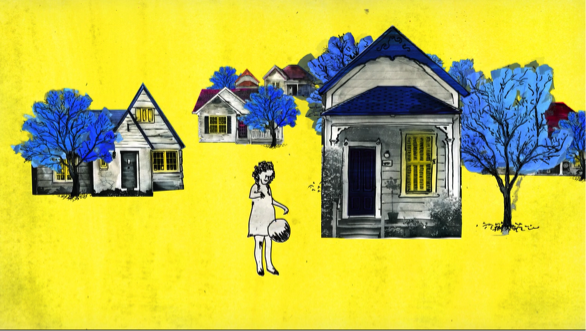
A still from the film “The Smiths.” The vivid colors used throughout the film convey the intense emotions of a family who is homeless, as they try to make ends meet.

I was a member of the project’s advisory team, so I had the opportunity to read the proposal by Neely Goniodsky. As I read it, I knew that the film should be – no, HAD to be – made.

Continue reading

The Beast Inside — A Story of Relentless Positivity

By Krista Kent, project assistant, Seattle University’s Project on Family Homelessness and Digital Design senior, Seattle U

Note: This is the third in a series in which we ask our staff to react to the “American Refugees” film that most appealed to them.


“I try my best. I see hundreds of people doing thousands of times better. If I keep doing my best and can’t make it, then I have to find some other way of survival.”


When life has taken a turn for the worse, it can be hard to stay positive. If you had no roof to sleep under and were left with no choice but to ask strangers for spare change, only to receive a condescending look at best, how would you hold up?

How would you react if someone told you to “get a job, you bum,” without knowing the circumstances you were in? Would it be easy to fight the “beast inside” and stay positive?

For Tilawn, who has lived in a car with his dad and slept under bridges, the battle against homelessness hasn’t been easy, but he remains positive. The film “The Beast Inside” tells the story of Tilawn and the barriers he faces while being homeless.

The Beast Inside- Drew Christie and Amy Enser; the car that Tilawn lived in with his dad

Tilawn was homeless with his dad from age eight. They often lived in their car in Snohomish County, Wash. Image from The Beast Inside.

  Continue reading

StoryCorps Finding Our Way — Tacoma stories painful, uplifting, sincere

Our StoryCorps project, “Finding Our Way: Puget Sound Stories of Family Homelessness,” has completed its recordings in Pierce and Snohomish counties. In this post from the StoryCorps blog, our partner Michelle Bova reflects on the first recordings in Tacoma. Check it out!


StoryCorps Tanya Mettlen and Jordan Kemper Tacoma

Tacoma mom Jordan Kemper talked to Tanya Mettlen of Catholic Community Services of Western Washington for her recording. Photo by Jonathan Ross of CCS.


For another view on the StoryCorps week in Tacoma, read this wonderful column by Larry LaRue of the News Tribune.

Continue reading

“Super Dads”: Stories of Resilience from Children and Fathers Faced with Homelessness

By Haley Jo Lewis, project assistant, Seattle University’s Project on Family Homelessness and Communication senior, Seattle U

Note: This is the second in a series in which we ask our staff to react to the “American Refugees” film that most appealed to them.


Life as a homeless family is “really scary.”

“Really scary…really scary. I can’t explain.” This quote from the film “Super Dads” reflects the raw honesty found within the accounts of homeless fathers interviewed by the filmmakers.

Unrelenting to sadness, weakness and fear: A father’s words are supposed to be filled with strength. In the film “Super Dads,” however, homeless fathers open up about their greatest fears, hardships, and struggles as they talk about their experiences being homeless — something they never thought they’d face.

“Super Dads” hit me the hardest of  the four animated shorts in “American Refugees.” It was those stories of resilience that moved me most. Their hardships are all too real, and pull me back to a time when my own father was homeless, struggling to find a place where we could take solace.


Continue reading

“Home for Sale”: Nowhere to Call Home

 A film that showed me how close homelessness can be for families

Written by Emma Lytle, Seattle University senior communications major and project assistant, Seattle University’s Project on Family Homelessness 

 Note: This is the first in a series in which we ask our staff to react to the “American Refugees” film that most appealed to them.

Stability is the foundation and the glue that holds a family together. Stability comes in many forms, whether it’s sustaining a steady job or having a place to call home.

As the daughter of a firefighter and a nurse, I grew up feeling that sense of stability. But some families aren’t always so lucky. Sometimes that glue disappears from a family as parents struggle to make ends meet.

Home for Sale” is a captivating short film about the loss of a family’s stability and the reality of losing their home. This film showed me how close my family could have been to being homeless while I was growing up.

Home for Sale, American Refugees; Project on Family Homelessness, Film and Family Homelessness
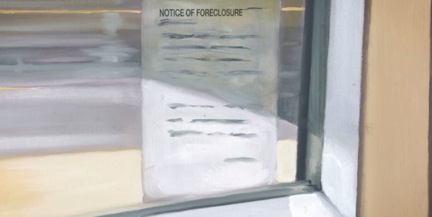
This is the foreclosure notice on the house in “Home for Sale,” just one of the many signs of a struggling family.

“That would never happen to us.”

This quote is from the short film. It’s what a couple says as they think about buying a foreclosed house. They feel they would never lose their home to foreclosure.

I have always believed this statement to be true for me and for my family too. This film shook me with the reality of homelessness.

Home for Sale, American Refugees; Project on Family Homelessness, Film and Family Homelessness
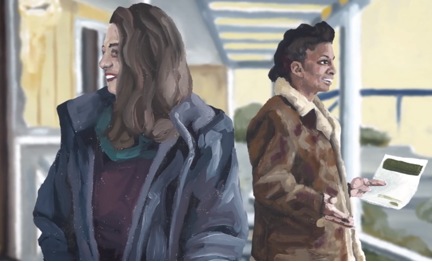
The couple looking at buying the foreclosed house. Like many others, they struggle with whether they can buy a house that represents the broken dreams of another family.

Continue reading

Project Cool: Supplying a Brighter Future for Children who are Homeless

Written by Krista Kent, Digital Design Assistant, Seattle University Project on Family Homelessness and senior at Seattle U

crayola-markers-

As a child I always loved buying new school supplies, and there was perhaps nothing better than a brand-new case of Crayola markers. Having worked in a first-grade classroom this past year, I have seen that students are still excited to have new supplies. But for families who can’t afford to buy supplies, local supply drives play an important role in the community.

Recently I had the opportunity to participate in Project Cool for Back to School, which gathers supplies and creates backpacks for local school-aged children who are homeless. Volunteers came together at Columbia City Church of Hope earlier this month to help assemble and pack backpacks full of school supplies and dental kits.

Presented by the Seattle/King County Coalition on Homelessness, Project Cool prepared more than 1,300 backpacks with the help of 130 volunteers over the course of five days. The backpacks will be distributed to nonprofit organizations in August, just in time to get them to students all over King County.

Behind the scenes of a major effort

When I first arrived, I signed in, created a nametag, and then was led downstairs to where all the supplies were set up. There were big signs clearly marking where each station was located, including a first-aid station and a table set with coffee and donuts; it was clear that Project Cool really appreciates their volunteers.

During introductions I learned that there were volunteers from differing backgrounds: staff from the Salvation Army, YWCA, YMCA, even students who are currently in the youth program at the YMCA. Regardless of whether this was our first or fifth year with Project Cool, we all arrived with the same intention of making sure that every student comes to class with school supplies.

After introductions, the 11 of us split into groups and set off to different stations. Some prepared dental kits, some took out the recycling, and others cut ribbon that would be used to mark backpacks ready for distribution. For the two hours that I was there, I removed the plastic encasing from the backpacks and took out the small silicone sanitary packs that were inside.


Continue reading